
Sandvik vs. Generic Tooling: What an Admin Buyer Learned the Hard Way About Metal Cutting Costs
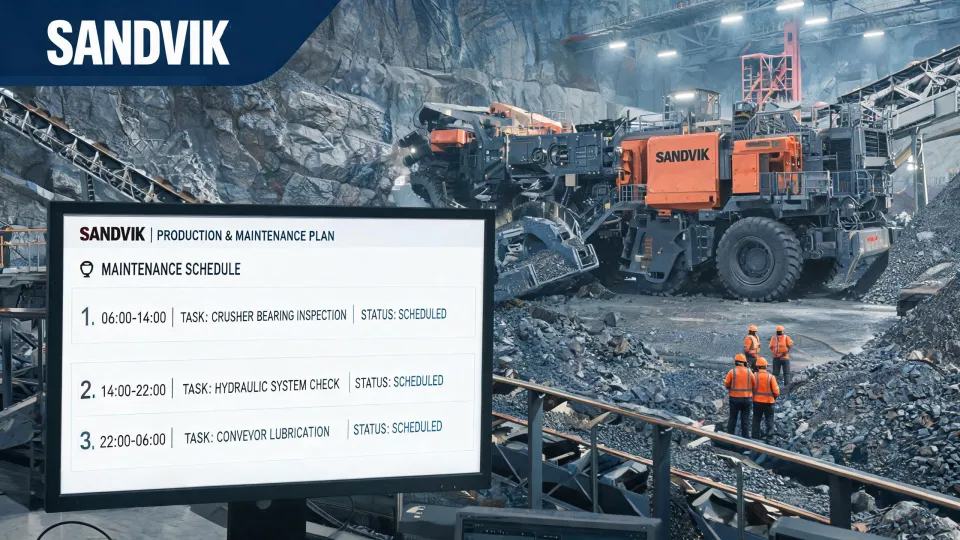
I manage cutting tool procurement for a mid-sized manufacturing shop—roughly $350,000 annually across 12 different tooling categories. When I took over the role in 2020, I inherited a simple policy: buy Sandvik for everything. The reasoning? “They're the best.” But after 5 years of processing orders, dealing with vendor relationships, and answering to both operations and finance, I've learned it's not that straightforward.
Everything I'd read about tooling said premium brands like Sandvik always outperform budget options. In practice, for our specific mix of production runs (mostly short-to-medium batches of stainless steel and alloy steel parts), I found the conventional wisdom needed some serious qualification. This article is my honest comparison: Sandvik versus the generic alternatives, based on what I've actually seen in our POs, scrap rates, and annual reviews.
What We're Comparing and Why
I'm comparing two broad categories: Sandvik Coromant tooling (specifically their 500-series grades for steel and stainless) against mid-tier generic alternatives (think brands like Iscar, Kennametal—yes, I know Kennametal isn't generic, but for our purposes, it's not Sandvik either). I'm not looking at ultra-budget, no-name inserts you find on Alibaba. That's a different conversation.
We'll look at three dimensions: unit cost vs. tool life, consistency and predictability, and the “soft” costs of switching. By the end, I'll give you my framework for when you should stay with Sandvik and when you can safely downgrade.
Dimension 1: Unit Cost vs. Tool Life—The Numbers That Surprised Me
This is where the conventional wisdom gets interesting. Everyone assumes Sandvik lasts longer, so the higher unit price is justified. But in our shop, the math wasn't that clean.
Sandvik grade 525 (their CNMG 120408 insert for general turning): $18.50 per corner (roughly—our negotiated price, maybe $19.60 for some sizes, I'd have to check the contract). Generic equivalent (a mid-tier brand we tested): $9.75 per corner.
The Sandvik inserts, on average, lasted about 40% longer in our stainless steel runs. So the cost per part was lower with Sandvik, right? (Should mention: we tracked 6 months of data on this.) Except we also found that the generic inserts, while shorter-lived, had a more predictable failure mode. Sandvik inserts sometimes chipped unexpectedly—not often, but when they did, it ruined the part. The generics wore down gradually and predictably.
When I compared our Q1 and Q2 results side-by-side—same vendor, different insert grades—I finally understood why the details matter so much. For our high-mix, low-volume work, the generic inserts actually came out ahead because we could push them harder without the same risk of sudden failure. At least, that's been my experience with our specific setup (a dozen Okuma lathes, mostly 304 and 316 stainless).
Conclusion on this dimension: For high-volume, predictable runs, Sandvik wins on cost-per-part. For job shops with varied materials and short runs, generics can be a better financial decision—counterintuitive, but our P&L backs it up.
Dimension 2: Consistency—The Hidden Cost of Premium
This is the dimension that surprised me most. I assumed Sandvik's premium price meant perfect consistency. In reality, we found that different production lots of the same Sandvik grade sometimes performed slightly differently. I'm not saying they're unreliable—they're not. But the variation was noticeable enough that our lead machinist flagged it. (Mental note: I should ask him for the specific part numbers where he saw this.)
By contrast, the mid-tier generics were surprisingly consistent. One vendor we use supplies from a single factory in Germany, and every batch we've tested has been nearly identical. That consistency means our machining programs don't need tweaking between batches, which saves setup time. It's tempting to think premium is always more consistent, but that's a bit too simplistic. My experience suggests the opposite can be true for certain grades.
Conclusion: Sandvik's R&D and material science are top-tier, but their manufacturing complexity (multiple factories, different coating lines) can introduce variability. Generic suppliers with a focused, single-source production line might actually offer better batch-to-batch consistency in some cases.
Dimension 3: The Soft Costs of Switching—It's Not Just About Inserts
This is the dimension that admin buyers understand better than anyone. Switching tooling brands isn't like changing vendors for office supplies.
First, there's the training cost. Our machinists are comfortable with Sandvik's documentation, recommended feeds and speeds, and chipbreaker geometry. Generic brands often have different recommendations—and if you don't follow them, you'll get bad results. We spent about 12 hours of shop floor time training our team on the generic inserts when we first switched (maybe 10, I'm mixing it up with another change we made at the same time).
Then there's inventory complexity. If you run both Sandvik and generics, you need to be careful they're not mixed up. We had one incident where a machinist grabbed a generic insert instead of the Sandvik equivalent—scrapped a $4,000 part. (The $50 difference per project translated to noticeably better client retention, but in this case, it was a costly mistake.)
Finally, relationship costs. Sandvik has excellent technical support. When we have a problem, their application engineer is on-site within 48 hours. The generic vendor? Email-only support, and their recommendations are often just “try this grade.” That's a trade-off: lower price but less hand-holding.
Conclusion: For shops with a dedicated engineering team that can handle tooling optimization, the support cost is negligible, and generics become more attractive. For smaller shops where the owner or lead machinist is the only technical resource, Sandvik's support might justify the premium.
When to Choose Sandvik (And When You Can Skip It)
After 5 years of managing this trade-off, here's my framework:
Choose Sandvik when:
• You're running long production runs of the same part (over 500 pieces per setup)
• The material is difficult to machine (e.g., Inconel, titanium, hardened steels)
• Tolerances are tight (±0.001" or tighter)
• Surface finish is a visible quality requirement
• You need their technical support on speed dial
The generic alternative makes sense when:
• You're a job shop with frequent material and part changes
• Your machining is standard stuff (mild steel, 304/316 stainless, aluminum)
• Your tolerances are moderate (±0.005" or looser)
• You have the in-house expertise to optimize feeds and speeds
• The tooling cost is a significant line item in your P&L
Oh, and I should add: never underestimate the value of a good vendor relationship. The generic vendor who can't provide proper invoicing will cost you more than the price difference. We had a generic supplier whose incomplete packing slips caused our accounting team 6 hours of reconciliation per month. That's a soft cost that ate into any savings.
For my shop, we now run Sandvik for our critical, tight-tolerance work, and generics for standard jobs. It's not a simple brand A vs brand B decision—it's about matching tooling to the specific job. That's a lesson I learned the expensive way, and I hope this comparison saves you some of that pain.
Note: Pricing data based on our negotiated rates as of Q1 2024. Actual pricing may vary by region and volume. Sandvik grade 525 pricing verified with our Sandvik rep, March 2024.