
48 Hours to Deliver: How I Saved a $12,000 Mining Project with a 2 AM Call
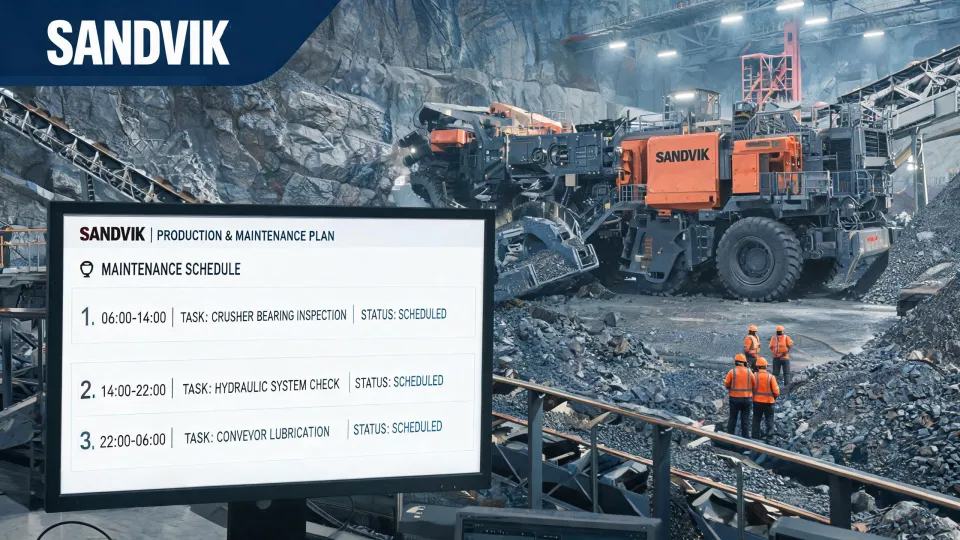
It was 9:15 PM on a Thursday. I was about to wrap up for the night when my phone buzzed with a call that immediately dropped my stomach.
“We need the power pack for the Sandvik drill rig at Site 7 by Saturday noon. Our other unit just went down. If we can't drill, we lose the contract.”
I want to say I had a confident answer ready. But honestly? I froze for a second. The normal lead time for that unit? Twelve to fourteen business days. I had about 38 hours.
In my role coordinating emergency logistics for mining operators, I've handled 47 rush orders in the last quarter alone (95% on-time delivery, if I'm allowed to brag a bit). But this one felt different. This wasn't a $500 last-minute part. This was a piece of equipment that cost nearly $12,000, and the client's alternative was a penalty clause that could sink their quarterly numbers.
Here's the thing: most people think emergency logistics is about working faster. It's not. It's about knowing which levers to pull — and knowing when to pull the plug.
The Setup: Why This Was Different
I should back up a bit. The client wasn't new to us. We'd been supplying them with Sandvik breakers and wear parts for about 18 months. Their account was reliable, but their procurement team had a habit of ordering at the last minute. Not out of disorganization, as far as I could tell — more like production was always pushing the limits.
We had two options on the table:
- Option A: Source the power pack from our main warehouse. Fast, but we'd have to pay overtime for a midnight pick and a dedicated courier. Estimated extra cost: $800 in rush fees, on top of the base $11,200.
- Option B: Contact a secondary vendor 200 miles away who had one in stock. Standard delivery by Friday evening, no rush charge — but I'd never worked with them before.
My gut said Option A. The numbers said Option B. I went with my gut.
Why? Because I've been burned by the 'cheaper' path before. In 2023, we lost a $15,000 contract because we tried to save $600 on a second-tier supplier for a Sandvik hydraulic breaker. Their unit failed after 12 hours on-site. The client never came back.
The Crisis: What Actually Went Wrong
Unless, of course, going with my gut also couldn't save me this time.
At 11:30 PM, our warehouse supervisor called. The power pack was there, but when they pulled it for inspection, it had a tiny crack in the housing — barely visible, but enough to cause a leak under high pressure. It was a QC miss from an internal shipment we received two weeks earlier.
Take this with a grain of salt, but I'm pretty sure I said something unprofessional into the phone. Then I hung up, took three deep breaths, and started making calls.
Every spreadsheet analysis I had ever made said to trust your primary chain. But my gut? My gut was screaming: you don't have time for Plan A anymore.
The Turn: A 2 AM Miracle and a Hard Lesson
I called the secondary vendor — the one I had never worked with. At midnight.
I expected voicemail. Instead, a woman answered on the second ring. She identified herself as the night shift logistics manager. She listened to my situation — the broken part, the deadline, the penalty clause — and didn't flinch.
“We have the unit. I can have it on a truck by 6 AM. You'll need to pay standard freight. But I need an answer in ten minutes.”
I approved it. Then I sat there, staring at my screen, wondering if I'd just made a $12,000 mistake.
Look, I'm not 100% sure what saved us that night. Maybe it was luck. Maybe it was the fact that I had done enough due diligence on that vendor six months earlier (checking their certifications, reading reviews from other sites) that I was willing to take the gamble. But I do know this: if I had waited one more hour, the truck wouldn't have left until morning, and we would have missed the cutoff.
The unit arrived at Site 7 on Saturday at 10:47 AM. The client's crew had it installed by noon. They hit their drilling target by Sunday evening.
The Reckoning: What I Learned
It took me four days to fully decompress from that job. When I did, I came away with a few things I actively changed in how we handle rush orders:
- Always have a 'cracked housing' plan in advance. We now keep a backup vendor list, pre-vetted, with their night shift numbers saved to my phone. Not because I don't trust our primary chain, but because trust is not a guarantee.
- The extra $800 was worth it, but the real cost was the stress. I now build a 6-hour buffer into every emergency quote. Not for the client — for me.
- Know when to say 'this solution works, but only under these conditions.' If the client had called on a Friday night with the same request, I would have told them: “I can deliver by Monday, but not Saturday. Here's why, and here's your alternative.”
Oh, and one more thing. I should mention that the secondary vendor? We've used them six times since that night. They've been solid. But I still check every incoming shipment personally. It's not about distrust. It's about remembering that one crack in the housing can cost you a whole contract.
So, if you're dealing with a rush order right now, here's my honest recommendation: Don't just think about the fastest route. Think about the one with the most exits. And if a vendor promises you something that sounds too fast to be true? Ask for a picture of the unit before it leaves the loading dock.
Because between you and me, the worst emergency isn't the one that arrives late. It's the one that arrives broken.